Why Crews Keep Coming Back to the Same Lube Truck Builder
Customers trust their distributor to get the equipment right. When a customer describes a new job and says he needs a lube truck, he’s usually relaying a secondhand picture of what the operator actually needs – and then the distributor has to turn that into a real spec sight-unseen. Asking questions early on in the process makes that translation work. But asking the right questions is what brings the customer back for the next truck.
The Real Reason a Crew Sticks With the Same Builder
Ask any distributor who’s been at this a while why certain customers keep coming back, and the answer is usually simple: the truck worked. Specifically, for that particular job and crew, day after day after day. The tanks sizes were correct, the reels were easy to access for repeated use, refilling fluids didn’t take half an afternoon, etc. A crew fighting its own equipment notices, and a crew running a truck that fits notices too. That fit is what a customer remembers when the next truck purchase comes up, long after the initial sales conversation itself has faded.
Reputation in this business travels through word of mouth, between operators and fleet managers across job sites, tradeshows, and everywhere in between. A lube truck that holds up becomes a quiet recommendation – and a distributor known for getting the spec right becomes the first call for that type of build.
The Questions That Actually Determine a Lube Truck’s Configuration
A lube truck spec starts to take real shape once these details are on the table. These questions are specific and function-focused, ensuring the truck that gets delivered is the one that actually fits the job.
- How many pieces of equipment does the crew service in a day, and what type? A truck covering two or three tracked machines needs a different volume and reel setup versus one servicing a dozen trucks and loaders in the same shift.
- Can the crew get back to a fill station every day, or are they out on-site for days at a time? A crew returning nightly can run smaller tanks. One that’s away from a refill point for several days needs enough capacity to cover that stretch without running dry mid-job.
- Is the jobsite in a moderate climate or an extreme one? Cold or heat that impacts fluid flow rates are a major consideration when choosing a lube truck body style. Harsher temps point toward an enclosed body instead of an open one, as it protects the product viscosity better. For milder climates that may have seasonal cold snaps, an open body with heated tank bases is a viable option if an enclosed doesn’t allow for the appropriate tanks capacities.
- Does the job call for an air-operated system, or a hydraulic-operated one? Air-operated units fit small to mid-size sites running a regular maintenance schedule with lighter, occasional product use. Hydraulic-operated units are built for larger or rougher sites (like mining or forestry) where the crew is moving high volumes across several pieces of heavy equipment close to nonstop – and they specifically need to keep pumping fluid in cold weather without needing an air compressor to do it.
- Does the truck need to carry diesel fuel? Most of TPL’s open-body base models (3417, 4417, and 5517) come with a DOT-approved diesel fuel tank already included in the build. The enclosed TPL 6517 and semi-enclosed TPL 8817 don’t, making their site and product applications different. Additionally, most non-CDL builds on a 5500 or 6500 chassis do not have space for an added diesel fuel tank.
- Does the crew have a CDL driver, or does the truck need to stay under that weight class? The answer informs the chassis choice and tank sizes, ensuring the entire build lands inside GVWR limits for whichever one applies.
- How many technicians need to work the truck at the same time? A bigger job might run two techs: one on fuel, DEF, and coolant and the other on oil. Multiple operators change how the reel cabinet gets laid out so they aren’t crossing hoses, competing for storage access, or at risk of avoidable injury.
- Does the crew need DEF or coolant on board in addition to oil? Both are optional, but are needed in-field often enough that they should be taken into consideration from the start – especially since adding the extra tanks in stainless steel will slightly impact cost.
- Does the truck run off a PTO, or does it need its own power source? A PTO pulls power from the truck’s engine, so the truck has to keep running to keep the pumps working – and that adds up in fuel on a long day parked at a job site. In contrast, a Miller Enpak carries its own engine and fuel supply, so the pumps run without the truck needing to idle indefinitely to power fluid exchange.
- Does the customer want the truck in TPL’s standard white, or delivered in a color of their own? TPL’s “standard white” is a single-stage IC (or “integrated clearcoat”) and stands the test of time against most job sites. However, having a lube truck delivered in brand colors (or even just a preferred color) is always an option. Metallic and flat finishes are both available.
Each question is simple on its own and usually can be answered in a single call. Asked early, they’re what makes a lube truck fit the job for which it’s purchased.
However, skipping any of this tends to surface later once the truck is already built and out on the job. A body built for the wrong climate turns into fluid that thickens on a cold morning, and a chassis sized without checking CDL requirements turns into a licensing problem instead of a quick spec change. Both are easy to catch early, but expensive to fix once the truck exists.
What Getting the Spec Right the First Time Means for the Next Sale
A lube truck built from real answers to specific questions tends to hold up once it’s in service, and that pays off longer than the sale itself. A crew running a truck that fits stays focused on the work, creating profitability from consistent functioning on site.
The distributor who delivered that fit is the first name that comes to mind for the next truck, replacement, fleet addition, or referral. Knowing which questions to ask – and why each one matters – turns a sales conversation into a consultation, and customers remember the difference.
Every operation/application is a little different. Reach out for a quote and we’ll help you dial in what fits.

RELATED ARTICLES

What Determines Whether a Fuel-Lube Truck Fits Your Operation
Fleet size, site layout, and fuel supply determine whether a fuel lube truck fits. Here’s what to consider and what we work through on the build.
Why Crews Keep Coming Back to the Same Lube Truck Builder
Why do crews keep calling the same distributor for their next lube truck? It comes down to asking the right questions before the build begins.
Building a Lube Truck Around the Job It Has to Do
A lube truck built around your job fits from day one. See how fluid mix, daily volume, job site, and chassis shape the right custom build.
Customizing Mobile Oil Change Service Trucks for Multi-Site Fleet Work
Keeping multiple job sites serviced takes coordination and the right equipment. When crews are spread out, the way your service truck is set up makes all the difference in how smoothly the day runs. A well-built mobile oil change service truck keeps maintenance consistent and crews productive. It’s not about bells and whistles, but about…
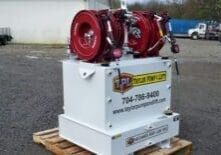
7 Things Fleet Coordinators Should Look For When Shopping for Lube Skids
When your job is to keep crews moving and equipment serviced, a lube skid can be a part of what keeps the whole operation steady. Every hose, pump, and tank plays a role in how smoothly the day runs. Whether it’s your first skid or your fifth, the same principles apply: match the build to…
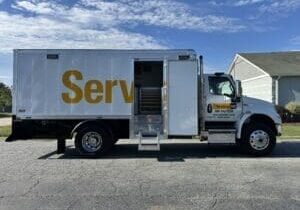
Training New Crews on Your Lube Service Setup & Lube Service Body Before You Roll Out
Bringing new hands onto the crew can shift the pace. There’s a little more explaining, a few extra checks— that’s normal. The key is helping operators get comfortable with your lube setup quickly so the work keeps moving safely and efficiently. At Taylor Pump & Lift, we’ve seen how structured training keeps crews in sync…

Rebuilding a Pump (in Under 30 Seconds)
Our trucks and skids often get the majority of our limelight, but our in-house repair team is a key part of our TPL powerhouse. Working with a variety of oil pumps, meters, and reels, this team often has the tedious (but rewarding) job of diagnosing, repairing, and reassembling equipment for almost every customer in our…
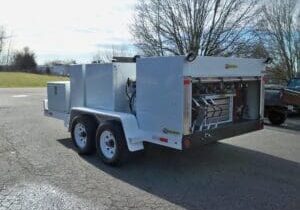
What Makes a Fuel and Lube Trailer Truly Fleet-Ready? Specs That Matter
Fleet maintenance teams count on equipment that performs the same way every day. A fuel and lube trailer or lube service trailer is part of the rhythm that keeps service schedules tight, machines supplied, and crews focused on production instead of waiting on service. A trailer built for fleet work is designed with reliability at…
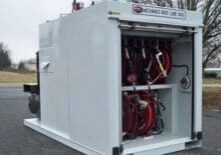
How to Customize a Lube Skid for Service Trucks Across Multiple Sites
If you manage a fleet that’s constantly bouncing between job sites, you know the drill: trucks waiting on fluids, machines parked mid-shift, crews wasting hours on runs back to the shop. Every delay eats into production and drives costs through the roof – and the waste adds up fast for a single truck burning about…

How Decision Makers in Construction Save Money with In-House Mobile Lube Equipment
Similar to most industries, in construction, time is money – which means keeping your vital heavy equipment running smoothly, without unnecessary downtime, is essential to staying on schedule and on budget. This factor is especially important as construction companies across the U.S. work to stay ahead and complete projects before the winter season rolls in…