
Customizing Mobile Oil Change Service Trucks for Multi-Site Fleet Work
Keeping multiple job sites serviced takes coordination and the right equipment. When crews are spread out, the way your service truck is set up makes all the difference in how smoothly the day runs. A well-built mobile oil change service truck keeps maintenance consistent and crews productive. It’s not about bells and whistles, but about matching your setup to the work. Here’s how to customize your truck so your operation runs steady across every site.
Pick the Right Platform for the Way You Work
The platform is where your build begins. The truck or trailer you choose sets your payload, storage, and how comfortably your crew can operate in the field.
Mobile Lube Vans
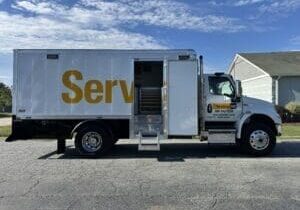
Compact and enclosed, vans fit smaller fleets and tight routes. They’re ideal for servicing light-duty vehicles or equipment in controlled environments. The enclosed workspace keeps fluids and tools clean while protecting techs from the weather, while specialty shelving with netting containment keeps filters, parts, and hand tools organized and protected on every route.
Service Body Skids
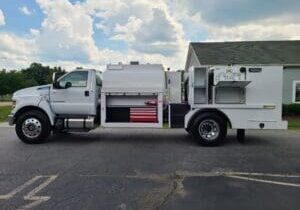
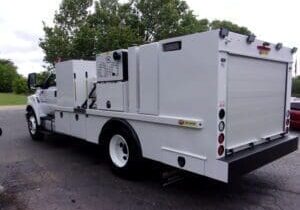
For most field operations, a service body truck paired with a mobile lube setup or custom lube skid offers the right balance of strength and flexibility. These builds handle multiple fluids, can include cranes or compressors, and allow hose access at ground level for safer operation.
Lube Trailers
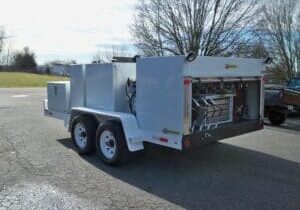
For long routes or shared-duty work, lube trailers add reach without tying up another vehicle. They can be towed by existing trucks and swapped between crews, giving flexibility when jobs shift between sites.
When choosing a platform, start with your daily routes, the space available, and whether CDL limits apply. The right foundation keeps your crew focused on work, not the equipment.
Once your base vehicle is set, make sure your tank setup fits the job with enough capacity to cover the route without hauling unnecessary weight.
Optimal Tank Capacity for Multi-Site Routes
Tank sizing drives your truck’s efficiency. Get it right, and you’ll cover your full route without refilling or carrying excess weight.
Baseline Tank Volumes
For most mobile oil change service trucks:
- 50–60 gallons per fresh fluid (engine oil, hydraulic oil, gear oil, coolant, and DEF) works for standard service routes.
- Heavy-duty fleets may scale up to 80–120 gallons for high-use products or longer PM rounds.
Plan for Waste Oil Capacity
A balanced setup keeps your service efficient and compliant. Plan your waste system with enough capacity and easy handling in mind:
- Your waste tank should hold at least half your total fresh capacity
- Most fleet lube systems carry between 100 and 180 gallons of waste oil storage
- Add pump-assisted return lines to speed up waste-oil recovery and keep transfers clean and controlled
- Use sealed containment to prevent spills and stay compliant with SPCC standards
Design for Flexibility
Your fleet’s needs evolve, so your system should be ready to adapt. Build in flexibility that keeps future changes simple:
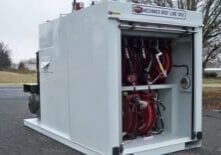
- Modular or custom lube skids built to fit your service-body truck let you adjust your setup quickly as workloads shift.
- Dual 60-gallon tanks give you plenty of product without crowding the service-body layout.
- On full lube trucks, tanks are permanently mounted in the configuration you choose at build time, so the truck shows up ready to match how your crew works.
Build a Clean, Fast Fluid System
Your pump and hose setup determines how efficiently the job gets done. A clean, fast-moving system saves time on every PM stop and keeps crews focused on work.
Choose the Right Pump Setup
Air-powered pumps are the standard for field reliability. These pumps run off a gas-powered compressor that starts with a 12V battery but operates independently once running. Taylor builds all systems around pump-driven flow—proven, dependable, and built for high-volume service work.
Match Flow Rate to the Job
Flow rate is key. Each pump has manufacturer-recommended GPM and PSI settings designed to match hose length and fluid viscosity. Those specs should guide your setup from the start. In cold conditions, proper flow depends on heated enclosures or insulated tanks to maintain viscosity, not adjusting pump pressure, which can burn out components and lead to costly repairs.
Use Dedicated Lines and Reels
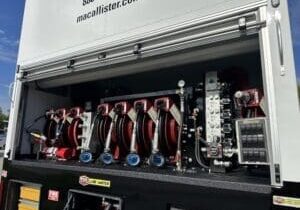
- Use dedicated lines for each product to prevent cross-contamination. Every Taylor system includes labeled reels with vinyl identification markers showing which hose connects to which tank and fluid.
- Standard 50-foot reels handle most service layouts and match the reel’s physical capacity without overflow risk.
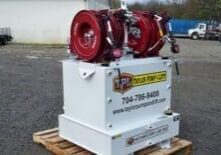
- Reel placement depends on cabinet layout and product mix. Oil reels mount overhead to maximize tank space below, while fuel and DEF reels can sometimes sit lower for easier reach.
Keep the System Clean
Every mobile lube setup should include:
- Metered nozzles for accurate dispensing
- Sealed waste oil returns to prevent drips
- Welded drain pans positioned to contain used oil filters and other service waste, placed based on your truck layout and workflow
Once your flow system is dialed in, make sure your power and air setup can keep it running steady through every shift.
Power and Air Systems That Keep the Job Moving
Your PM service truck is only as reliable as the systems that power it. Whether you’re running pumps, tools, or lighting, your setup should match how it’s used in the field.
Air Systems
A good compressor setup keeps your pumps running consistently and your fluid flow steady. The right configuration depends on your workload and routes.
- Built-in compressors in the 20–30 CFM range handle pumps.
- All compressors start with a 12V battery system, but run independently once fired up.
- Compressor performance can vary with altitude and temperature extremes. TPL accounts for your operating conditions when speccing the right unit.
Electrical Power
Power keeps everything running, especially when jobs run long or sites don’t have easy hookups. Crews typically use:
- A pure sine inverter for lighting, meters, and electronics.
- An onboard generator for heavy tools or all-day service.
- A pump-driven setup powered by a gas-driven compressor gives you steady performance without overworking the truck’s electrical system.
Operator Access
Smooth workflow comes from a smart layout. Controls and fittings should work with your crew, not against them:
- Ground-level controls let techs start pumps and adjust valves without climbing.
- Centralized quick-connects keep everything within reach and easy to find.
When power and air systems fit the job, everything else runs smoother—there is less downtime, fewer resets, and more productive hours.
Storage That Works Like a Mobile Shop
A strong organization keeps work moving. A truck that’s laid out with intention saves time, protects tools, and helps every service run smoothly from site to site.
Cabinets and Drawers
Good storage means knowing where everything lives. Operations that invest time in smart layout design see the difference in crew efficiency every day:
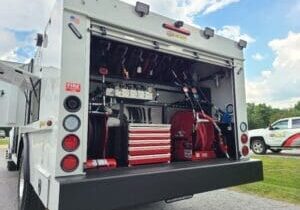
- Lockable side cabinets secure filters, fittings, and meters against theft or tampering.
- Enclosed compartments protect components from dust and moisture during transport.
- Drawer packs and bins with clear labels make it easy to grab parts without slowing down.
- Weatherproof seals and latches stand up to vibration, rain, and rough travel conditions.
Mounting and Stability
A steady setup keeps every component secure, even on rough terrain. The goal is to make access simple and safe:
- Reinforced mounts hold compressors, jacks, and welders firmly in place during transport.
- Open access paths give technicians room to reach hoses, reels, and service points easily.
- Overhead storage in enclosed lube trucks keeps long tools within reach and the workspace clear.
When every item has a home, setup, and service flows naturally. Crews can move from one task to the next without delay, keeping every route consistent and productive.
All-Weather and After-Dark Readiness
Your truck should perform the same at sunrise, midnight, or midwinter. When conditions change, your system should protect both your fluids and your crew.
Cold-Weather Prep
Cold conditions can slow your operation fast if fluids thicken or lines freeze. Keep your system ready for winter with:
- Heated or enclosed service bodies to keep oil and DEF flowing at the right viscosity.
- Tank blankets or heat tracing to prevent line clogs and protect pumps.
Lighting and Visibility
Crews work long hours and often after dark, so visibility matters as much as uptime. Boost nighttime safety and precision with:
- LED scene lights are mounted around the truck for clear, even coverage.
- Task lighting aimed at fill points and reels to prevent mistakes and fatigue.
Hot and Dusty Environments
Heat, dust, and vibration wear on both equipment and techs. Protect components and maintain performance with:
- Well-placed vents help keep components cool without adding extra complexity to the truck.
- Insulated panels and weather seals to stabilize interior temps.
- Anti-slip flooring for safe footing in wet or high-heat conditions.
When your truck’s built to handle all conditions, your crew stays focused and productive whatever the forecast.
Build In Compliance From the Start
Compliance doesn’t have to be complicated. Building smart from the start keeps you covered and saves time on inspections later.
Whether setting up a new truck or refreshing an existing one, a few standards make the difference between smooth operations and downtime:
- EPA SPCC: Have portable containment ready for fluid transfers at fixed sites.
- DOT Transport: Keep each tank at or below 119 gallons to simplify labeling.
- ISO 22241 (DEF): Maintain fluid purity.
- ISO 4406 (oil): Use inline filters and sealed tanks to ensure cleanliness.
Crew Training
Every operator should know:
- Power-down and containment procedures
- Spill response
- Emergency contact protocols
Good habits protect both your crew and your fleet.
Partner With a Manufacturer Who’s Been in the Field
The final step is finding a lube truck manufacturer who understands both the specs and the realities of the job. A dependable manufacturing partner will:
- Build in-house for quality control
- Offer real-world feedback from other customer builds
- Handle warranty service quickly and locally
- Customize tank layouts and controls for your routes
At Taylor Pump & Lift, we build every system to match the conditions our customers face daily. Each build is tested, refined, and proven in the field, from skid units to full service bodies.
Keep Your Fleet Working With the Right Mobile Oil Change Truck
A strong mobile oil change service truck keeps every job on schedule. The right build matches your crew’s workflow, your routes, and the conditions you face every day. When everything fits the way it should, service runs steadily. Crews stay equipped, jobs stay on time, and every hour in the field goes further. That’s the result of a system designed for reliability and built for real work.
If you’re planning your next truck or updating your current setup, our team is here to help you spec a system that supports how your crew operates. Let’s build something that fits the way your crew works. Reach out to Taylor Pump & Lift. We build proven, field-tested systems designed for uptime, safety, and dependable performance across every site.

RELATED ARTICLES
Why Crews Keep Coming Back to the Same Lube Truck Builder
Why do crews keep calling the same distributor for their next lube truck? It comes down to asking the right questions before the build begins.
Building a Lube Truck Around the Job It Has to Do
A lube truck built around your job fits from day one. See how fluid mix, daily volume, job site, and chassis shape the right custom build.
Customizing Mobile Oil Change Service Trucks for Multi-Site Fleet Work
Keeping multiple job sites serviced takes coordination and the right equipment. When crews are spread out, the way your service truck is set up makes all the difference in how smoothly the day runs. A well-built mobile oil change service truck keeps maintenance consistent and crews productive. It’s not about bells and whistles, but about…
7 Things Fleet Coordinators Should Look For When Shopping for Lube Skids
When your job is to keep crews moving and equipment serviced, a lube skid can be a part of what keeps the whole operation steady. Every hose, pump, and tank plays a role in how smoothly the day runs. Whether it’s your first skid or your fifth, the same principles apply: match the build to…
Training New Crews on Your Lube Service Setup & Lube Service Body Before You Roll Out
Bringing new hands onto the crew can shift the pace. There’s a little more explaining, a few extra checks— that’s normal. The key is helping operators get comfortable with your lube setup quickly so the work keeps moving safely and efficiently. At Taylor Pump & Lift, we’ve seen how structured training keeps crews in sync…

Rebuilding a Pump (in Under 30 Seconds)
Our trucks and skids often get the majority of our limelight, but our in-house repair team is a key part of our TPL powerhouse. Working with a variety of oil pumps, meters, and reels, this team often has the tedious (but rewarding) job of diagnosing, repairing, and reassembling equipment for almost every customer in our…
What Makes a Fuel and Lube Trailer Truly Fleet-Ready? Specs That Matter
Fleet maintenance teams count on equipment that performs the same way every day. A fuel and lube trailer or lube service trailer is part of the rhythm that keeps service schedules tight, machines supplied, and crews focused on production instead of waiting on service. A trailer built for fleet work is designed with reliability at…
How to Customize a Lube Skid for Service Trucks Across Multiple Sites
If you manage a fleet that’s constantly bouncing between job sites, you know the drill: trucks waiting on fluids, machines parked mid-shift, crews wasting hours on runs back to the shop. Every delay eats into production and drives costs through the roof – and the waste adds up fast for a single truck burning about…

How Decision Makers in Construction Save Money with In-House Mobile Lube Equipment
Similar to most industries, in construction, time is money – which means keeping your vital heavy equipment running smoothly, without unnecessary downtime, is essential to staying on schedule and on budget. This factor is especially important as construction companies across the U.S. work to stay ahead and complete projects before the winter season rolls in…
How Lube Trucks Can Help Mining Site Operations Managers Hit Production Targets
It’s well-known that in every industry, the efficiency and durability of equipment are paramount. When your equipment fails, there is an inevitable reduction in productivity because of downtime. Thus, having a strategic preventative primary maintenance schedule is vital to keeping everything running smoothly. Yet, this critical maintenance can create its own problems. Taking the time…