
Training New Crews on Your Lube Service Setup & Lube Service Body Before You Roll Out
Bringing new hands onto the crew can shift the pace. There’s a little more explaining, a few extra checks— that’s normal. The key is helping operators get comfortable with your lube setup quickly so the work keeps moving safely and efficiently.
At Taylor Pump & Lift, we’ve seen how structured training keeps crews in sync and trucks running. The strongest fleets build learning into the day, so every operator works the same way, the equipment stays protected, and the job gets done right.
This post shares how experienced teams train new operators on both the lube service body (the truck and its components) and the lube service setup (the workflow that ties it all together). These are the same field-proven practices Taylor Pump & Lift customers rely on to keep their operations running smoothly, shift after shift.
Setup vs. Body: Getting on the Same Page
You’ve probably heard “lube service setup” and “lube service body” used like they mean the same thing. While they’re similar, one describes the physical equipment while the other describes the footprint designed to help the workflow flow easily and consistently.
Knowing the difference helps everyone communicate clearly and train consistently, especially when you’re bringing new operators into the mix.
The Lube Service Body
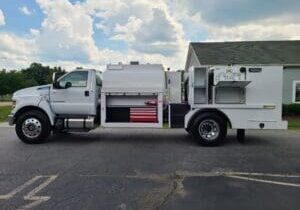
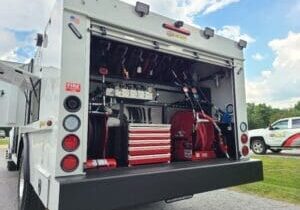
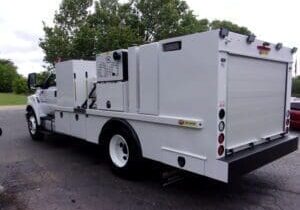
This is the truck itself: the tanks, reels, pumps, meters, and storage that make on-site service possible. It’s the hardware that keeps your operation moving.
The Lube Service Setup
This is the bigger picture: how the truck body, skid, or trailer fits into your workflow. It’s the sequence of how fluids move, tools are staged, and jobs stay efficient and safe from start to finish.
Why Both Matter
The body gives your crew the capability, while the setup defines the efficiency. When you train with both in mind, operators learn not just the equipment, but the rhythm of how your operation runs at its best. Once everyone’s speaking the same language, it’s easier to build a training process that stays consistent across every truck and crew.”
Why Structured Training Pays Off
Every crew has its own way of bringing new operators on board. The teams that stay efficient, safe, and steady share one thing in common: they train with structure and purpose.
A consistent approach builds confidence fast and keeps every operator working at the same high standard.
Here’s what that looks like in the field:
- Know your exact build.
Taylor Pump & Lift builds every lube truck to a proven standard, but most include custom layouts to ensure the right fluids and capacities are in place for your site’s equipment and service requirements.
- Training protects uptime and consistency.
When crews train the same way, routine checks become habit. That rhythm prevents small issues from turning into downtime and keeps every shift running steady.
- Structured training helps everyone — not just new hires.
Refresher onboarding gives experienced technicians a chance to reset habits, model safe behavior, and maintain the same standard across the fleet.
- Confidence drives performance.
Operators who know their layout and workflow don’t hesitate under pressure. They move with intent, handle gear correctly, and complete jobs faster without shortcuts.
Time spent on training is time invested in reliability. A steady, structured approach builds rhythm across the team. When everyone trains the same way, the day starts smoother, the work runs safer, and the job ends right on schedule.
And while structure builds confidence, it also strengthens the safety habits that keep crews moving without interruption.
Start With Safety: Before You Roll Out
Safety and productivity go hand in hand. Every crew member knows the job goes smoother when safety steps are part of the routine, not an afterthought.
Building that mindset early helps new operators see how safety keeps the day efficient and the crew confident.
1. Begin every shift with a pre-trip inspection
A few minutes of checks prevent hours of downtime. Build this habit from day one. Key steps include:
- Testing lights, brake signals, and beacons
- Checking tire pressure, tread, and wheel condition
- Listening for air leaks or vibration from lines and hoses
- Looking under the chassis and around the reel cabinet for product residue or leaks
- Verifying that the fire extinguisher, reflectors, and first aid kit are secure and accessible
- Confirming that paperwork, manifests, and SDS sheets are up to date
As Taylor Pump & Lift’s 2025 Safety Tips post reinforced, these pre-trips do more than meet compliance but build reliability. Crews that make inspections routine keep their trucks in service and their people safe.
Once the truck’s checked and cleared, shift focus to the people running it.
2. Cover HazCom and PPE
Operators should know where to find Safety Data Sheets (SDS) and how to read hazard labels. Review the basics of OSHA’s 1910.1200 Hazard Communication Standard:
- Identify the hazard pictograms
- Understand PPE requirements per fluid type
- Keep secondary containers labeled
- Know who to contact for exposure or spills
A quick HazCom review keeps everyone confident and consistent.
3. Prevent slips, trips, and falls
A lube service truck often works in tight, uneven spaces, where footing and hose management make all the difference. Encourage steady footing and organized hose management:
- Maintain three points of contact when climbing
- Coil and store hoses immediately after use
- Refill tanks from ground level whenever possible
- Use features like Taylor’s fast-fill manifold to stay off elevated surfaces
Every safe habit built in training becomes a reflex in the field, and that’s what keeps crews steady all season long.
4. Prevent repetitive motion injuries (RMI)
Operating a lube service body involves pushing, pulling, and coiling, all repetitive tasks. Encourage:
- Proper lifting (bend knees, not back)
- Using both hands when coiling hoses
- Alternating between tasks to reduce strain
- Taking breaks on time, not pushing through fatigue
Crews that stay mindful of posture and pacing stay healthier, longer, and more productive.
Walk the Layout: Learn the Lube Service Body
Knowing the body is the foundation of efficient work. Once operators understand the layout, they can apply that knowledge confidently in the field.
1. Follow the fluid flow
Start from the supply tanks and trace every line to its reel and application point. Then follow the waste oil return back to containment. When operators can visualize this flow, they make fewer mistakes and complete service steps in the right sequence.
2. Explain system logic
Every body layout serves a purpose:
- Balance: Tanks are positioned to distribute weight evenly.
- Access: Heavier or high-use fluids are placed closer to the reel cabinet.
- Efficiency: Hoses are arranged to reduce crossing or tangling.
Walking through these details helps operators work with the system, and not against it. Reinforce DEF and contamination prevention.DEF systems must remain separate per ISO 22241 standards. Use dedicated hoses, reels, and containers, no cross-use. A quick contamination briefing prevents costly SCR damage later.
3. Color-code and label everything
Use clear, durable labels for tanks and reels. Many crews color-code their systems for instant recognition: red for transmission, yellow for hydraulic, blue for DEF, etc. This visual system helps new operators learn faster and reduces confusion under pressure.
Encourage hands-on walkthroughs. Let operators open cabinets, follow lines, and identify components before their first field run. Confidence comes from familiarity.
Once operators understand the layout, it’s time to put that knowledge to work with a few quick practice runs.
Two Quick Drills That Build Confidence
Nothing builds confidence faster than hands-on practice. A few short, repeatable drills give new operators a feel for the equipment and the rhythm of the job.
Here are two worth running during the first week:
Oil Top-Off and Grease Service
A quick, controlled top-off teaches accuracy, hose control, and clean handoffs. Let new operators handle the reel, watch the meter, and finish clean. After a few runs, the motion becomes second nature.
Waste Oil Return and Shutdown
This one reinforces safe containment and a clean reset. Have operators run the waste oil line into containment, seal caps, coil hoses, and verify pressure relief before shutdown. It’s a simple routine that builds discipline and prevents small messes from turning into lost time.
Each drill takes about ten minutes, and running them daily for the first week helps new operators settle in fast. Crews that practice together stay in sync, and supervisors can trust that the process will be done right. Once those routines feel solid, checklists help lock in consistency and keep every shift on the same page.
Checklists Turn Training Into Habits
Checklists turn good habits into standard practice. When they’re visible and easy to follow, they remove guesswork and keep service consistent.
1. Create laminated quick-reference cards
Post them inside each reel cabinet and cab compartment. A simple “Start-Up” and “Shutdown” checklist reinforces consistency:
- Verify DEF and waste oil levels
- Check for leaks and residue
- Confirm SDS binder and PPE
- Reset meters and gauges
- Wipe and secure all compartments
2. Build accountability
Supervisors or senior techs can initiate checklists weekly until operators are fully cleared. This builds a culture of mentorship and shared responsibility, and not enforcement.
3. Keep it short and visual
Crews in the field don’t have time for long forms. Keep each checklist to one page or less with clear steps and icons for quick reference.
As many TPL customers have found, consistent checklists keep experience working for you and make every job feel second nature. Once your process is documented and repeatable, it’s easier to apply across every piece of equipment you run.
Train Once, Apply Everywhere
If your operation runs multiple lube service platforms, trucks, skids, or trailers, standardization matters. Operators should be able to move between units without confusion or retraining.
- Use the same color codes, labels, and terminology across all equipment.
- Align procedures and checklists fleet-wide.
- Store fluids and tools in similar layouts wherever possible.
- Encourage peer training. Experienced operators who lead onboarding sessions reinforce standards and build ownership across the team.
That consistency across platforms makes refresher training simple; everyone already speaks the same language.
Keep Crews Sharp: Training Never Really Ends
Training doesn’t stop once an operator is “cleared.” Ongoing learning keeps teams efficient, safe, and engaged.
- Monthly refreshers: Short, 15-minute toolbox talks on safety updates or new fluids.
- Quarterly ride-alongs: Supervisors observe and provide quick feedback.
- Annual reviews: Update procedures for new equipment, DEF systems, or environmental standards.
Rotate trainers so experienced operators share knowledge. When every crew member has led or mentored at least once, accountability spreads naturally.
Training Sets the Pace
Strong crews work in sync. When every operator knows the lube service body they’re running and how it fits into the setup, the whole operation runs smoother and safer. Effective training sets the rhythm for the day. It builds habits that keep work consistent, uptime steady, and every operator confident in the process. The real goal is reliability; crews who learn steadily, work steadily. That’s how you keep efficiency high and equipment performing from the first job to the last.
Whether you’re managing one truck or a full fleet, our team at Taylor Pump & Lift supports the same crews who type “lube service near me” looking for dependable gear that lasts. If your team could use updated checklists or a quick refresh on training for your Taylor-built equipment, our crew can help you fine-tune your process and keep your operation running at full strength.
Contact us today to talk with our team and find what works best for your crew.

RELATED ARTICLES
Why Crews Keep Coming Back to the Same Lube Truck Builder
Why do crews keep calling the same distributor for their next lube truck? It comes down to asking the right questions before the build begins.
Building a Lube Truck Around the Job It Has to Do
A lube truck built around your job fits from day one. See how fluid mix, daily volume, job site, and chassis shape the right custom build.
Customizing Mobile Oil Change Service Trucks for Multi-Site Fleet Work
Keeping multiple job sites serviced takes coordination and the right equipment. When crews are spread out, the way your service truck is set up makes all the difference in how smoothly the day runs. A well-built mobile oil change service truck keeps maintenance consistent and crews productive. It’s not about bells and whistles, but about…
7 Things Fleet Coordinators Should Look For When Shopping for Lube Skids
When your job is to keep crews moving and equipment serviced, a lube skid can be a part of what keeps the whole operation steady. Every hose, pump, and tank plays a role in how smoothly the day runs. Whether it’s your first skid or your fifth, the same principles apply: match the build to…
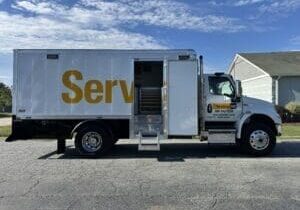
Training New Crews on Your Lube Service Setup & Lube Service Body Before You Roll Out
Bringing new hands onto the crew can shift the pace. There’s a little more explaining, a few extra checks— that’s normal. The key is helping operators get comfortable with your lube setup quickly so the work keeps moving safely and efficiently. At Taylor Pump & Lift, we’ve seen how structured training keeps crews in sync…

Rebuilding a Pump (in Under 30 Seconds)
Our trucks and skids often get the majority of our limelight, but our in-house repair team is a key part of our TPL powerhouse. Working with a variety of oil pumps, meters, and reels, this team often has the tedious (but rewarding) job of diagnosing, repairing, and reassembling equipment for almost every customer in our…
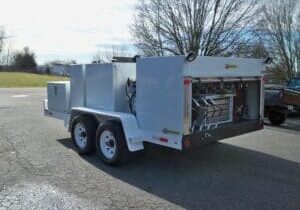
What Makes a Fuel and Lube Trailer Truly Fleet-Ready? Specs That Matter
Fleet maintenance teams count on equipment that performs the same way every day. A fuel and lube trailer or lube service trailer is part of the rhythm that keeps service schedules tight, machines supplied, and crews focused on production instead of waiting on service. A trailer built for fleet work is designed with reliability at…
How to Customize a Lube Skid for Service Trucks Across Multiple Sites
If you manage a fleet that’s constantly bouncing between job sites, you know the drill: trucks waiting on fluids, machines parked mid-shift, crews wasting hours on runs back to the shop. Every delay eats into production and drives costs through the roof – and the waste adds up fast for a single truck burning about…

How Decision Makers in Construction Save Money with In-House Mobile Lube Equipment
Similar to most industries, in construction, time is money – which means keeping your vital heavy equipment running smoothly, without unnecessary downtime, is essential to staying on schedule and on budget. This factor is especially important as construction companies across the U.S. work to stay ahead and complete projects before the winter season rolls in…
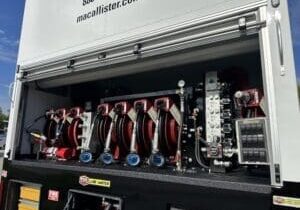
How Lube Trucks Can Help Mining Site Operations Managers Hit Production Targets
It’s well-known that in every industry, the efficiency and durability of equipment are paramount. When your equipment fails, there is an inevitable reduction in productivity because of downtime. Thus, having a strategic preventative primary maintenance schedule is vital to keeping everything running smoothly. Yet, this critical maintenance can create its own problems. Taking the time…