
Rebuilding a Pump (in Under 30 Seconds)
Our trucks and skids often get the majority of our limelight, but our in-house repair team is a key part of our TPL powerhouse. Working with a variety of oil pumps, meters, and reels, this team often has the tedious (but rewarding) job of diagnosing, repairing, and reassembling equipment for almost every customer in our roster. And while we cannot guarantee your pump will be fixed quite this quick – our team is known for their industry-leading turnaround times. Check out the full step-by-step write up of our pump reassembly and testing timelapse below. [A special thanks to Gene for starring in our video!]
PREP:
Prepare the pump by cleaning it thoroughly, then drying the pump and any additional parts with an air source. Collect the below before you begin:
- Upper piston
- Body seals (part #393530-22 and -23)
- Repair kit (part #353930)

A – 2 3/4″ x 3″
B – “Mickey Mouse” #1
C – 3/8″ x 1/2″
D – 2 5/8″ x 3″
E – 3″ x 3 13/16″
F – “Mickey Mouse” #2
PUMP REASSEMBLY:
- Grease and place the seals into the body of the pump (Note: the lips should be facing UP)
- Add the metal spacer and washer
- Grab the rod and apply a small amount of grease on the chamfer
- Tap the rod halfway into the bottom of the pump body
- Flip the pump over and place it into the vise
- Grab the upper piston screw washer and O-ring
- Put the screw with the washer into the top of the piston, sliding the O-ring onto the screen from the bottom
- Apply blue thread locker to the screw and snug the piston onto the rod (Note: make sure not to pinch the O-ring between the piston and the rod itself)
- Grab the lower cap and body O-rings, and one of the “mickey mouse” o-rings and grease it so it stays in place
- Put the upper piston O-ring on and grease
- Put the spool valve into the cylinder
- Apply a heavy amount of grease to the inside of the cylinder and put it into the upper piston (making sure not to pinch any of the three O-rings!)
- After getting the cylinder in, add the 2nd “mickey mouse” O-ring onto the top cap along with the top cylinder O-ring
- Apply grease to both and to the inlay (so they don’t fall down)
- Add the muffler cover, along with the top cap, and inserts the long bolts (make sure the keeps are at the bottom)
- Add nuts and tighten
- Flip the entire assembly sideway in the vise, and get the tube started on the lower piston (if it’s tight, add oil to the lower piston and inside the tube)
- Once on the lower piston, push the tube into the body of the pump (be careful not to strip the threads of the aluminum body)
- Make sure the threads are lined up and screw the tube in (again, be careful not to pinch the two O-rings on the tube)
- Once past the O-rings, snug the tube into the body
- Air test the pump without any product to ensure the pump is at least cycling
TESTING:
- Bring the entire pump assembly to a test bench/oil tank
- Screw the pump on, hook the air line (80 PSI) up to the pump, and oil line up to the oil outlet
- Turn the air on until the pump primes and begins to push oil through
- Check if it stalls out or does not blow air
- If every thing works properly, remove hoses and unscrew the pump from the test bench
- Drain test oil, and put plugs in the oil inlet and outlet
- Pump is now ready to go!
Don’t feel like doing all that yourself? Our in-house repair team is available to help diagnose and repair your oil and grease pumps for you. Submit a quote request, or call us directly and ask to speak with a member of our Repair team!

RELATED ARTICLES
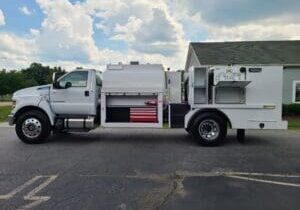
Why Crews Keep Coming Back to the Same Lube Truck Builder
Why do crews keep calling the same distributor for their next lube truck? It comes down to asking the right questions before the build begins.
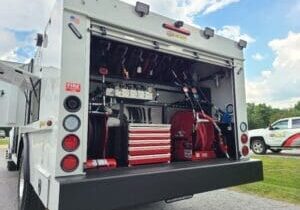
Building a Lube Truck Around the Job It Has to Do
A lube truck built around your job fits from day one. See how fluid mix, daily volume, job site, and chassis shape the right custom build.
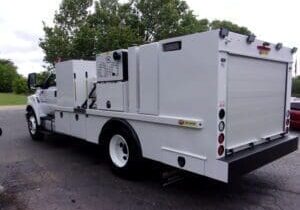
Customizing Mobile Oil Change Service Trucks for Multi-Site Fleet Work
Keeping multiple job sites serviced takes coordination and the right equipment. When crews are spread out, the way your service truck is set up makes all the difference in how smoothly the day runs. A well-built mobile oil change service truck keeps maintenance consistent and crews productive. It’s not about bells and whistles, but about…
7 Things Fleet Coordinators Should Look For When Shopping for Lube Skids
When your job is to keep crews moving and equipment serviced, a lube skid can be a part of what keeps the whole operation steady. Every hose, pump, and tank plays a role in how smoothly the day runs. Whether it’s your first skid or your fifth, the same principles apply: match the build to…
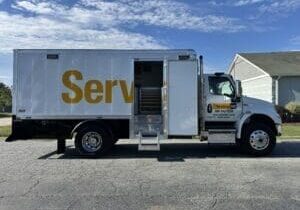
Training New Crews on Your Lube Service Setup & Lube Service Body Before You Roll Out
Bringing new hands onto the crew can shift the pace. There’s a little more explaining, a few extra checks— that’s normal. The key is helping operators get comfortable with your lube setup quickly so the work keeps moving safely and efficiently. At Taylor Pump & Lift, we’ve seen how structured training keeps crews in sync…

Rebuilding a Pump (in Under 30 Seconds)
Our trucks and skids often get the majority of our limelight, but our in-house repair team is a key part of our TPL powerhouse. Working with a variety of oil pumps, meters, and reels, this team often has the tedious (but rewarding) job of diagnosing, repairing, and reassembling equipment for almost every customer in our…
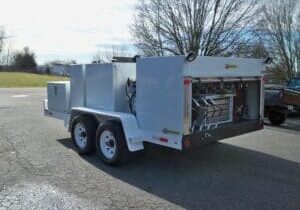
What Makes a Fuel and Lube Trailer Truly Fleet-Ready? Specs That Matter
Fleet maintenance teams count on equipment that performs the same way every day. A fuel and lube trailer or lube service trailer is part of the rhythm that keeps service schedules tight, machines supplied, and crews focused on production instead of waiting on service. A trailer built for fleet work is designed with reliability at…
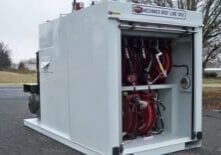
How to Customize a Lube Skid for Service Trucks Across Multiple Sites
If you manage a fleet that’s constantly bouncing between job sites, you know the drill: trucks waiting on fluids, machines parked mid-shift, crews wasting hours on runs back to the shop. Every delay eats into production and drives costs through the roof – and the waste adds up fast for a single truck burning about…

How Decision Makers in Construction Save Money with In-House Mobile Lube Equipment
Similar to most industries, in construction, time is money – which means keeping your vital heavy equipment running smoothly, without unnecessary downtime, is essential to staying on schedule and on budget. This factor is especially important as construction companies across the U.S. work to stay ahead and complete projects before the winter season rolls in…
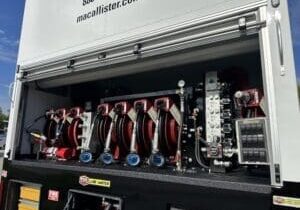
How Lube Trucks Can Help Mining Site Operations Managers Hit Production Targets
It’s well-known that in every industry, the efficiency and durability of equipment are paramount. When your equipment fails, there is an inevitable reduction in productivity because of downtime. Thus, having a strategic preventative primary maintenance schedule is vital to keeping everything running smoothly. Yet, this critical maintenance can create its own problems. Taking the time…