
Two-Post vs. Four-Post Automotive Lift: Which Do I Need?
Whether lifting heavy-duty trucks, commercial equipment, or personal vehicles, you need an automotive lift that’s durable, reliable, and suited to your space and needs. Hydraulic two-post and four-post lifts are the most popular options, each offering advantages. One might be better suited for undercarriage access, while the other might be better for storage and stability. So, how do you choose the right automotive lift for your business?
Below, we explore the key differences between two-post and four-post lifts and help you decide based on your workspace, the types of vehicles you service, and your overall budget.
Two and Four-Post Lifts: The Basics
Before deciding on a lift, you’ll want to know how two-post and four-post lifts work, as they are designed with specific advantages to suit different needs.
Two-post lifts have two vertical columns with adjustable arms that lift a vehicle by its frame at designated lifting points. These lifts provide excellent access to the undercarriage, making them a favorite in quick lube stations, general auto repair shops, and race team garages. Two-post lifts come in two configurations:
- Symmetric lifts have arms of equal length and are better suited for heavier, balanced loads like trucks and SUVs.
- Asymmetric lifts with shorter front arms and longer rear arms allow for easier door clearance and better positioning of lighter vehicles.
A four-post lift has four vertical columns supporting a platform that vehicles can drive onto, which then lifts them to the desired height. These lifts are commonly used in fleet maintenance shops, truck repair facilities, and personal garages where vehicle storage is a top priority. Four-post lifts distribute weight across four points, holding larger weight capacities and providing greater stability than two-post lifts. That makes them ideal for heavy-duty applications. Many models include rolling jacks, which allow you to lift the wheels off the platform for brake and suspension work.
Factors To Consider When Choosing a Vehicle Lift
There are a few factors you’ll want to consider when comparing two-post and four-post lifts. Understanding how these factors affect lift performance can help determine which is better for your space.
Weight Capacity
If you need to service heavy-duty vehicles, weight capacity is a major factor.
- Two-post lifts generally support up to 18,000 lbs, making them well-suited for most light and medium-duty vehicles, including sedans, pickup trucks, and some smaller commercial vans.
- Four-post lifts can handle a lot more weight, with heavy-duty models capable of supporting 30,000 lbs or more, making them ideal for large trucks, buses, and heavy equipment.
If you primarily work with heavy-duty trucks or need an option suitable for commercial fleet maintenance, a four-post lift is the better choice. For general automotive repair, a two-post lift will provide plenty of power for most garages.
Undercarriage Access
A two-post lift gives unrestricted access to a vehicle’s undercarriage, making it ideal for repairing the engine, transmission, brakes, and suspension systems. Because the vehicle is lifted by the frame, technicians can access all the critical components hidden underneath.
A four-post lift partially obstructs undercarriage access because of the platform the vehicle sits on. The platform won’t be an issue for routine maintenance like oil changes, alignments, and tire work. However, it will require additional tools, such as rolling jacks, to perform brake repairs.
Garage Space
Shop layout can be a major consideration when choosing a lift.
If you have a smaller workspace and need to maximize the available space, a two-post lift may be a better option. Two-post lifts are more compact and require less floor space, so they can be a good fit for smaller garages, quick lube stations, and independent mechanics.
If space isn’t an issue and you are more concerned about stability, four-post lifts are a good option. Although they take up more space, they allow vehicles to drive on and off quickly, which can be a big benefit for high-volume shops.
Stability & Safety
Both lifts are designed for safety when used correctly, but four-post lifts offer more stability due to their four-column design. They have a wider footprint and more balanced support, so people favor them when lifting or storing large vehicles.
A two-post lift can be a safe and efficient option if you primarily perform quick repairs and maintenance. The lift relies on arms that must be positioned correctly under the vehicle’s lifting points. If they aren’t aligned correctly, there is a greater risk of instability, especially with heavier loads.
Budget
An investment in an automotive lift needs to fit into your budget. If affordability is a key consideration, look at the two-post lifts. These are typically more cost-effective and require a lower initial investment. They can be a more practical option for small repair shops.
Four-post lifts can have a higher upfront cost. However, if you need to service heavy trucks or require additional storage options, the benefits can outweigh the initial investment.
Recap: Which Automotive Lift Is Right for You?
Choose a two-post lift if:
- You need full access to the undercarriage for repairs.
- Your shop services light- and medium-sized vehicles.
- Space in your garage is limited.
- You need a budget-friendly lift.
Choose a four-post lift if:
- You regularly work with heavy-duty trucks and commercial vehicles.
- Stability and weight distribution are top priorities.
- Your shop needs a drive-on lift for quick services.
- You want a lift that can double as vehicle storage.
Get Expert Advice on Automotive Lifts
Does one of these lift types sound like the perfect fit for your shop? Whatever type of automotive lift you need, we have a reliable, durable solution.
As a family-owned and operated business with over three decades of experience, we take pride in delivering high-quality, expert-installed automotive lifts that stand the test of time. We’re committed to getting you the best lift for your option, with plenty of two-post and four-post lift options to suit your needs. Contact us today to learn more about our lift installation and repair services, as well as our full lineup of lube trucks, skids, trailers, and more. We look forward to helping you find the right equipment to keep your business running smoothly for years to come

RELATED ARTICLES

What Determines Whether a Fuel-Lube Truck Fits Your Operation
Fleet size, site layout, and fuel supply determine whether a fuel lube truck fits. Here’s what to consider and what we work through on the build.
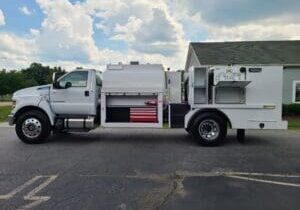
Why Crews Keep Coming Back to the Same Lube Truck Builder
Why do crews keep calling the same distributor for their next lube truck? It comes down to asking the right questions before the build begins.
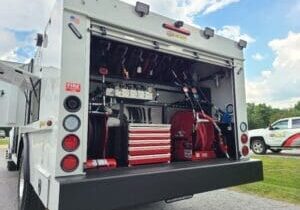
Building a Lube Truck Around the Job It Has to Do
A lube truck built around your job fits from day one. See how fluid mix, daily volume, job site, and chassis shape the right custom build.
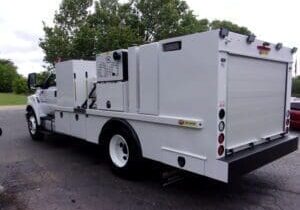
Customizing Mobile Oil Change Service Trucks for Multi-Site Fleet Work
Keeping multiple job sites serviced takes coordination and the right equipment. When crews are spread out, the way your service truck is set up makes all the difference in how smoothly the day runs. A well-built mobile oil change service truck keeps maintenance consistent and crews productive. It’s not about bells and whistles, but about…
7 Things Fleet Coordinators Should Look For When Shopping for Lube Skids
When your job is to keep crews moving and equipment serviced, a lube skid can be a part of what keeps the whole operation steady. Every hose, pump, and tank plays a role in how smoothly the day runs. Whether it’s your first skid or your fifth, the same principles apply: match the build to…
Training New Crews on Your Lube Service Setup & Lube Service Body Before You Roll Out
Bringing new hands onto the crew can shift the pace. There’s a little more explaining, a few extra checks— that’s normal. The key is helping operators get comfortable with your lube setup quickly so the work keeps moving safely and efficiently. At Taylor Pump & Lift, we’ve seen how structured training keeps crews in sync…

Rebuilding a Pump (in Under 30 Seconds)
Our trucks and skids often get the majority of our limelight, but our in-house repair team is a key part of our TPL powerhouse. Working with a variety of oil pumps, meters, and reels, this team often has the tedious (but rewarding) job of diagnosing, repairing, and reassembling equipment for almost every customer in our…
What Makes a Fuel and Lube Trailer Truly Fleet-Ready? Specs That Matter
Fleet maintenance teams count on equipment that performs the same way every day. A fuel and lube trailer or lube service trailer is part of the rhythm that keeps service schedules tight, machines supplied, and crews focused on production instead of waiting on service. A trailer built for fleet work is designed with reliability at…
How to Customize a Lube Skid for Service Trucks Across Multiple Sites
If you manage a fleet that’s constantly bouncing between job sites, you know the drill: trucks waiting on fluids, machines parked mid-shift, crews wasting hours on runs back to the shop. Every delay eats into production and drives costs through the roof – and the waste adds up fast for a single truck burning about…

How Decision Makers in Construction Save Money with In-House Mobile Lube Equipment
Similar to most industries, in construction, time is money – which means keeping your vital heavy equipment running smoothly, without unnecessary downtime, is essential to staying on schedule and on budget. This factor is especially important as construction companies across the U.S. work to stay ahead and complete projects before the winter season rolls in…