
Answer These 4 Questions Before Buying a Water Truck
Scouting the right water truck for your specific application can be challenging. Our customers often have questions regarding key features of the truck itself. Below, we explore the four most important questions you should ask when shopping for a water truck: choosing a chassis, product capacity, pump and spraying system, and new vs. used.
But before we dive into the specifics, the first step is to consider not just your specific application, but every possible use within your business model for your water truck.
- What is its main purpose? (fire suppression, dust control, agricultural, etc.)
- What’s the jobsite terrain look like? (Tight turns vs. wide open fields, etc)
- When your current project is complete, will you be selling this truck in the foreseeable future?
Now that we’ve got those thoughts moving, let’s get into it.
What Sort of Chassis Do I Need for My Water Truck?
The chassis of any piece of equipment is (quite literally) its foundation. The type of chassis you choose will determine what sort of work and terrain the truck can handle.
- Will my truck be making tight turns in a quarry or mountain road?
- How rough is the terrain at my usual job sites?
- Will this truck drive only on paved roads forever?
Generally, water trucks are built with three different types of chassis:
- Off-road platforms (often best for agricultural, construction, and some quarrying situations)
- Standard truck chassis (for hauling water on paved roads only)
- Articulate frames (jointed chassis are more maneuverable for sharp turns and are often used in construction and mining)
At TPL, we build water trucks with durable steel chassis and both on-and off-road capabilities. Our trucks are built to take a beating on all sorts of tough terrain.
How Much H2O Do I Really Need?
While there are some applications that require an extra large amount of water, typical water truck tank capacities are anywhere from 1,000 – 4,000 gallons. To help determine which capacity will best suit your needs, ask yourself:
- How often will you use it at a singular job site?
- How many job sites do you usually service?
- How often you will have access to a refill source?
To help calculate this, consider the following examples:
Business #1: A small, commercial landscaping crew needs a way to irrigate a 6 dozen acres a few times a week to keep their clients happy. There is a water source accessible on-site, so they don’t have to go far for refilling. They may only need 2,000 gallons of capacity.
Business #2: A government subcontractor controlling the dust at a new 300,000-acre air base development. With a long drive back to water and huge areas to cover, they need the most tank capacity they can find in a water truck – 4,000+ gallons is the way to go here.
Ultimately, there is no one-size-fits-all answer to this question, so it’s worth thinking through and discussing with our savvy sales team.
Which Pumping and Spraying Systems Do I Need?
The water-dispensing system is arguably the most important aspect of your new water truck, and should make the job as quick and easy as possible. While getting the water out seems straightforward, not all systems are built equally. TPL water trucks include front and rear spray bars with an all-in-one in cab control system. This makes it easy to use, even with a single operator. Dual spray nozzles ensure spraying coverage, while the pumping system is easy to use and maintenance. Of course, there are other, less convenient pumping and spraying systems on the market. But if you’re looking for a professional truck, most of them are out-of-date and inadequate for your needs.
Now that we’ve covered your chassis, pump and spraying systems, and water truck capacity, let’s move to the final question when buying a water truck: buy new or used?
New vs. Used: Which Works Better For You?
Whether you are shopping for your first water truck – or your 10th – it’s best to prepare a checklist of the pros and cons of new vs. used vehicles.
New Water Truck Benefits:
For larger corporate organizations, businesses looking to reduce their taxable income with vehicle depreciation, those “scaling up” with a heavy workload on the horizon, and anyone who would sell this truck in the foreseeable future, we suggest you buy a brand new water truck.
At TPL, our brand-new water trucks are:
- Reliable, because they’re under warranty
- Supported with service and support contracts and records for future sale
- Easy to finance
- Easy to sell in the near future, with support records and warranty intact
Used Water Truck Benefits:
The only real benefit of a used water truck is a lower up-front cost. Realize that you’re trading warranties, service and support, and guaranteed reliability for that lower price. You may also be trading fuel economy and safety features, depending on the age of the truck. Even with the current market, gently used vehicles with low mileage and outstanding maintenance records aren’t that much cheaper than a new vehicle.
Potential issues with buying used include:
- Difficult to finance with a bank or credit union
- Possibly unreliable, especially without maintenance records
- More difficult to re-sell without warranties and records on hand
Ultimately, only you can determine if a used water truck is better for your business model and current stage. For most of our customers, the benefits of a new truck outweigh any investment hesitancies by a landslide.
Still Considering? We Can Help.
If you’re considering a brand new water truck and want to explore your custom options, contact us. Our experienced, down-to-earth sales team will help you make the right choice for your organization. We offer a variety of options to suit your needs, and know every option inside and out!

RELATED ARTICLES
Why Crews Keep Coming Back to the Same Lube Truck Builder
Why do crews keep calling the same distributor for their next lube truck? It comes down to asking the right questions before the build begins.
Building a Lube Truck Around the Job It Has to Do
A lube truck built around your job fits from day one. See how fluid mix, daily volume, job site, and chassis shape the right custom build.
Customizing Mobile Oil Change Service Trucks for Multi-Site Fleet Work
Keeping multiple job sites serviced takes coordination and the right equipment. When crews are spread out, the way your service truck is set up makes all the difference in how smoothly the day runs. A well-built mobile oil change service truck keeps maintenance consistent and crews productive. It’s not about bells and whistles, but about…
7 Things Fleet Coordinators Should Look For When Shopping for Lube Skids
When your job is to keep crews moving and equipment serviced, a lube skid can be a part of what keeps the whole operation steady. Every hose, pump, and tank plays a role in how smoothly the day runs. Whether it’s your first skid or your fifth, the same principles apply: match the build to…
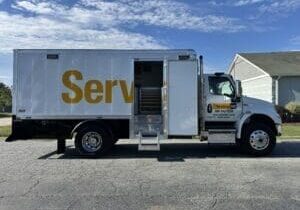
Training New Crews on Your Lube Service Setup & Lube Service Body Before You Roll Out
Bringing new hands onto the crew can shift the pace. There’s a little more explaining, a few extra checks— that’s normal. The key is helping operators get comfortable with your lube setup quickly so the work keeps moving safely and efficiently. At Taylor Pump & Lift, we’ve seen how structured training keeps crews in sync…

Rebuilding a Pump (in Under 30 Seconds)
Our trucks and skids often get the majority of our limelight, but our in-house repair team is a key part of our TPL powerhouse. Working with a variety of oil pumps, meters, and reels, this team often has the tedious (but rewarding) job of diagnosing, repairing, and reassembling equipment for almost every customer in our…
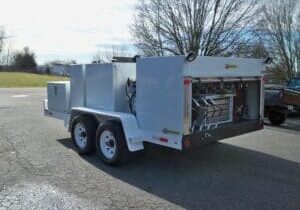
What Makes a Fuel and Lube Trailer Truly Fleet-Ready? Specs That Matter
Fleet maintenance teams count on equipment that performs the same way every day. A fuel and lube trailer or lube service trailer is part of the rhythm that keeps service schedules tight, machines supplied, and crews focused on production instead of waiting on service. A trailer built for fleet work is designed with reliability at…
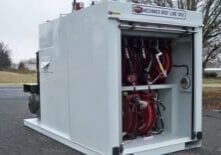
How to Customize a Lube Skid for Service Trucks Across Multiple Sites
If you manage a fleet that’s constantly bouncing between job sites, you know the drill: trucks waiting on fluids, machines parked mid-shift, crews wasting hours on runs back to the shop. Every delay eats into production and drives costs through the roof – and the waste adds up fast for a single truck burning about…

How Decision Makers in Construction Save Money with In-House Mobile Lube Equipment
Similar to most industries, in construction, time is money – which means keeping your vital heavy equipment running smoothly, without unnecessary downtime, is essential to staying on schedule and on budget. This factor is especially important as construction companies across the U.S. work to stay ahead and complete projects before the winter season rolls in…
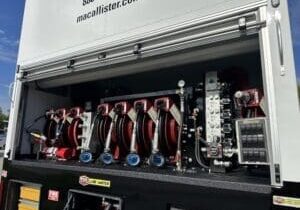
How Lube Trucks Can Help Mining Site Operations Managers Hit Production Targets
It’s well-known that in every industry, the efficiency and durability of equipment are paramount. When your equipment fails, there is an inevitable reduction in productivity because of downtime. Thus, having a strategic preventative primary maintenance schedule is vital to keeping everything running smoothly. Yet, this critical maintenance can create its own problems. Taking the time…